


For professional barbers and grooming brands, a reliable hair clipper or beard trimmer needs strong cutting performance and long-term durability. It must cut thick, coarse, or wet hair smoothly without pulling or snagging. It should also remain reliable during long hours of salon use.
Two key factors affect performance: motor technology and blade materials. The right combination improves cutting efficiency, reduces friction, and extends product life.
This guide explains the main engineering considerations for brands sourcing professional hair clippers and trimmers from an OEM/ODM manufacturer.
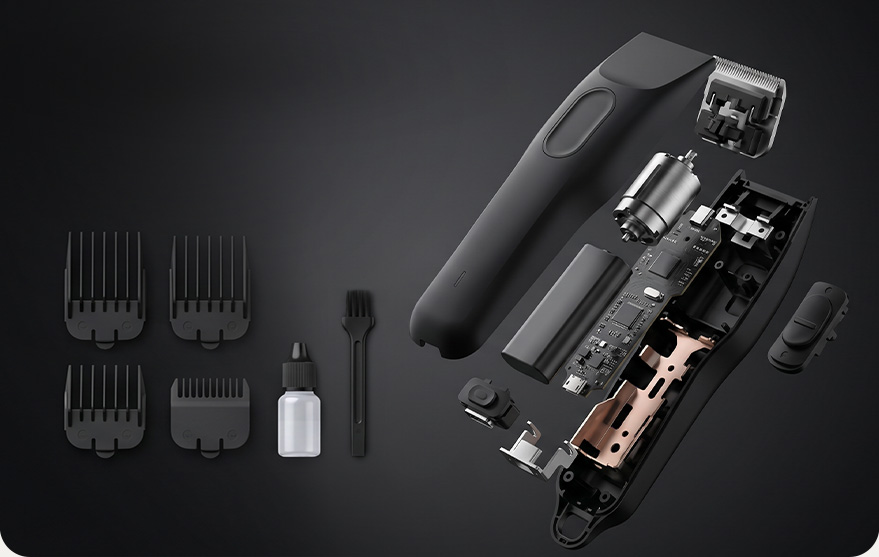
The motor drives the cutting blade and affects cutting speed, torque, and performance under load. Different motor designs suit different grooming applications.
Rotary motors convert electrical energy into rotational motion. An eccentric drive mechanism then transfers this motion to the cutting blade.
These motors provide strong cutting power for thick hair and bulk hair removal. They are suitable for professional clippers designed for frequent salon use.
For OEM/ODM projects, motor selection should consider torque, operating speed, power consumption, and heat management. These factors help manufacturers balance cutting performance with user comfort.
Magnetic linear motors use electromagnetic force to move the cutting blade back and forth. This design can deliver high cutting frequency and consistent performance under suitable operating conditions.
Linear motors are useful for precision trimming, clean outlines, and detailed grooming. Their performance depends on motor design, power supply, and blade configuration.
When developing a custom clipper, brands should evaluate cutting speed, noise, vibration, and battery performance together.
Blade material affects sharpness, wear resistance, corrosion protection, and heat generation. Choosing the right material helps brands meet different price points and market requirements.
Stainless steel offers a practical balance of strength, corrosion resistance, and durability. It is widely used in hair clippers and beard trimmers for everyday grooming.
Blade performance also depends on heat treatment, grinding precision, tooth geometry, and surface finishing. These manufacturing processes help determine cutting quality and service life.
Diamond-Like Carbon (DLC) and titanium-based coatings can improve blade surface hardness and reduce friction when properly designed and applied.
DLC coatings are often selected for their wear resistance and low-friction properties. Titanium-based coatings can also improve surface durability and support specific product designs.
For OEM/ODM buyers, coating options should be evaluated based on the blade substrate, coating process, durability tests, and target product positioning.
Zirconia ceramic offers high hardness and excellent corrosion resistance. Ceramic moving blades can also help reduce heat transfer compared with some metal blade materials.
When paired with a compatible metal fixed blade, ceramic components may help improve thermal comfort during use. Actual performance depends on blade geometry, contact pressure, lubrication, and operating speed.
Blade design affects how efficiently a clipper feeds, captures, and cuts hair. Motor performance alone cannot guarantee a smooth cutting experience.
Deep-tooth blades can help feed larger amounts of hair into the cutting area. They are often considered for bulk cutting and work on thicker hair.
Shallow-tooth blades can support more controlled cutting and detailed trimming. They are useful for outlining, close fades, and precision grooming.
The best tooth design depends on the intended application, blade alignment, and the required cutting length.
Friction between moving and fixed blades can increase operating temperature and accelerate wear. Regular lubrication helps reduce friction and supports consistent cutting performance.
Blade surface finishing, contact pressure, motor output, and housing design also influence heat management. Manufacturers should evaluate these factors through durability and continuous-operation testing.
For brands, wholesalers, and distributors, product development involves more than selecting a motor or blade material. Each component should match the target market, retail price, and intended application.
Pritech supports OEM/ODM customization for hair clippers and beard trimmers. Depending on the selected model and project requirements, customization options may include:
As a personal care appliance manufacturer, Pritech works with brand owners, wholesalers, and distributors to develop products for their target markets.
Contact our team to discuss your OEM/ODM hair clipper or beard trimmer project, including product specifications, customization options, and order requirements.





 Basket(3)




 CHINA
 LIBERIA
 FRANCE
 BARBADOS
 KIRIBATI


