


For personal care appliance brands expanding into international markets, choosing the right supply chain model is important. It can affect import costs, shipping efficiency, local assembly, and production management.
Two common models are Semi-Knocked Down (SKD) and Completely Knocked Down (CKD). Both allow brands to complete some or all assembly work in the target market.
So, what is the difference between SKD vs CKD? More importantly, which model fits your business?
This guide explains the differences between CBU, SKD, and CKD and how each model works.
Before comparing SKD vs CKD, it is useful to understand the three main supply models.
With the CBU model, products are fully assembled, tested, packaged, and shipped from the manufacturing factory.
The finished products arrive ready for distribution or retail sales.
CBU is suitable for brands that want a simple import process without setting up a local assembly operation.
With SKD manufacturing, products are partially assembled before shipment.
For example, circuit boards, motors, or other technical modules may be pre-assembled and tested at the factory. Final assembly is then completed in the destination market.
The exact SKD configuration depends on the product design, assembly requirements, and local regulations.
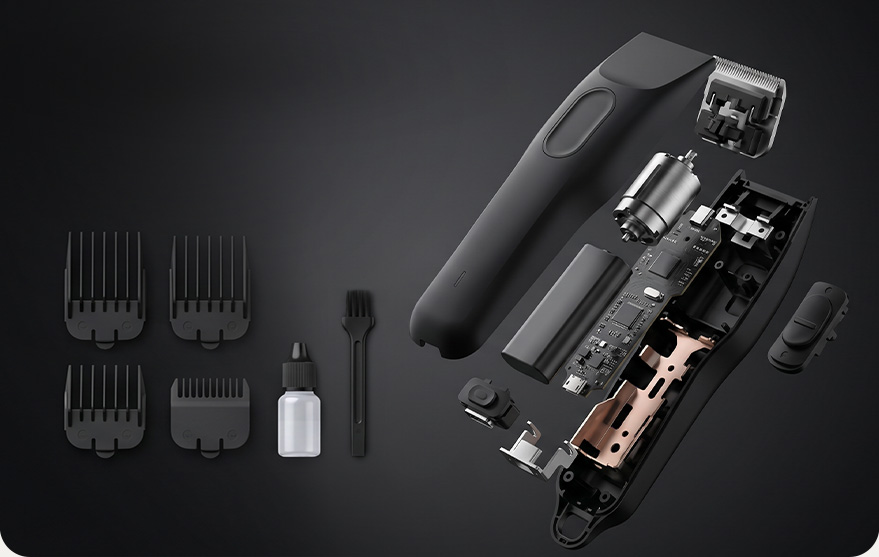
With CKD manufacturing, products are shipped as separate components for complete local assembly.
Components may include:
Compared with SKD, CKD manufacturing requires more local assembly capability, equipment, and quality control.
The main difference between SKD vs CKD is the level of assembly completed before shipment.
| Model | Factory Assembly | Local Assembly | Local Capability |
|---|---|---|---|
| CBU | Complete | None | Low |
| SKD | Partial | Final assembly | Medium |
| CKD | Component-level | Complete assembly | High |
In simple terms, SKD keeps some assembly work at the original factory, while CKD moves more of the assembly process to the destination market.
Therefore, SKD can offer a balance between factory control and local assembly. CKD provides more opportunities for localized production but requires stronger local capabilities.
Import duties can vary between finished products and components.
In some markets, components or semi-assembled products may receive different tariff treatment from fully assembled products. However, the actual duty depends on factors such as HS codes, product configuration, customs classification, and local regulations.
For this reason, brands should check the customs requirements of their target market before choosing an SKD or CKD model.
A suitable SKD or CKD manufacturing strategy can then be evaluated based on total landed cost, local production requirements, and market-entry plans.
Shipping fully assembled personal care appliances often requires retail packaging. This can increase the space needed during transportation.
By contrast, SKD and CKD components can sometimes be packed more efficiently, depending on the product design.
This may improve shipping density and container utilization.
As a result, brands can compare CBU, SKD, and CKD shipping costs when planning international distribution.
However, the actual freight savings depend on the product structure, packing method, order quantity, and transportation route.
Local assembly can provide greater supply chain flexibility. At the same time, it requires consistent quality control.
The factory and local assembly team should follow standardized procedures for:
At Pritech, we support international SKD and CKD projects with technical documentation, assembly guidance, pre-tested components, and quality control support.
These procedures help overseas assembly teams follow the same product requirements as the original manufacturing facility.
The right supply model depends on several factors, including:
For brands that need some local assembly while keeping key production processes at the factory, SKD manufacturing can be an option.
For companies with established local production capabilities, CKD manufacturing can provide greater flexibility for localized assembly.
CBU may be more suitable when a brand wants to import fully finished products without establishing a local assembly operation.
Pritech provides OEM, ODM, SKD, and CKD manufacturing solutions for personal care appliances.
Our product range includes:
We can support brands with product development, component production, assembly documentation, quality control, and customized packaging.
If you are comparing SKD vs CKD for international market expansion, Pritech can discuss your product requirements and help you evaluate the appropriate assembly model.





 Basket(3)




 CHINA
 LIBERIA
 FRANCE
 BARBADOS
 KIRIBATI


